A good brush is a small investment that pays off only if you look after it. Whether it is a sash brush for trim, a fine watercolor round, or a fluffy makeup blender, the thing that ends most brushes early is not heavy use — it is bad cleaning, careless drying, and storage that crushes the tip. The good news is that brush care takes a few minutes and almost no special gear.
The short version: clean the brush as soon as you finish, work the cleaner from the ferrule outward, reshape the tip while it is wet, and dry it flat or hanging so water never sits in the ferrule. Do that consistently and a mid-range brush will outlast several neglected expensive ones.
Why brush care matters
The bristles are only half of a brush. The other half is the ferrule — the metal band that clamps the bristles to the handle — and the glue inside it. Most brush deaths trace back to that hidden zone. Dried paint packed up near the ferrule splays the bristles permanently. Water trapped inside it loosens the glue, and the brush starts to shed. Standing a wet brush on its tip bends the bristles into a hooked shape that never fully recovers.
Care is really about protecting three things: the shape of the tip, the flexibility of the bristles, and the bond at the ferrule. Every step below serves one of those three.
Step 1: Clean it right after you use it
The single most important habit is to not let anything dry in the brush. Paint, medium, and makeup all stiffen as they cure, and once they harden near the ferrule you cannot fully remove them.
- Wipe off the excess first. Drag the brush across a rag or paper towel to remove most of the product before it touches water. Less material in the wash means a cleaner result.
- Match the cleaner to the medium. Water-based paints (acrylic, latex, watercolor) and most makeup clean with lukewarm water and a little mild soap. Oil-based paint needs the right solvent (such as a mineral-spirit type product) followed by soap and water. Using water on oil paint just smears it around.
- Work gently, root to tip. Swirl the bristles against your palm or a textured cleaning pad and let the soap lift product from the base toward the tip. Do not grind the brush flat or scrub against the bottom of a jar — that is what splays the bristles.
A safety note: if you use solvents, work in a ventilated space, avoid skin contact, and never pour them down the drain — let used solvent settle in a sealed jar, reuse the clear liquid, and dispose of the rest as hazardous waste per local rules.
Step 2: Rinse until the water runs clear
Soap left in a brush dries stiff and attracts grime, so rinse thoroughly. Hold the brush so water runs from the ferrule toward the tip, never the other way, which would force water and residue up into the ferrule. Keep going until the runoff is completely clear and the lather is gone. With makeup brushes especially, squeeze gently along the bristles and check that no tinted water comes out.
Step 3: Reshape the tip while it is wet
This is the step most people skip, and it is what keeps a brush "sharp." While the bristles are damp and pliable, gently pinch and stroke them back into their original profile — a fine point for a round, a clean chisel edge for a flat, a soft dome for a blender. If your brush came with the plastic sleeve over the bristles, you can slip it back on to hold the shape, but only on a barely-damp brush, never a soaking one, or you will trap water.
A drop of brush conditioner on natural bristles, rinsed lightly, keeps them supple. Synthetic bristles rarely need it.
Step 4: Dry it the right way
How a brush dries decides whether it keeps its shape:
- Lay it flat or hang it bristles-down. Flat on a towel at the edge of a table, or clipped to a rack so it hangs tip-down, lets water drain away from the ferrule.
- Never stand it bristles-up in a jar to dry. Water runs down into the ferrule, loosens the glue, and causes shedding.
- Never dry it tip-down pressed against a surface. That bends the bristles into a permanent hook.
- Skip the heat. Hair dryers and radiators can crack handles, melt glue, and frizz natural bristles. Air-dry at room temperature.
Let the brush dry fully before storing it. A brush that feels dry on the outside can still be damp at the ferrule.
Step 5: Store so the shape survives
Once dry, store brushes so nothing presses on the tips. Lay them flat in a drawer, stand them handle-down in a jar so the bristles point up and untouched, or roll them in a bamboo or canvas brush wrap for transport. Keep them out of direct sun and away from damp, which can invite mildew on natural hair. For makeup brushes, a closed case or a cover over the bristles keeps dust and bacteria off between uses.
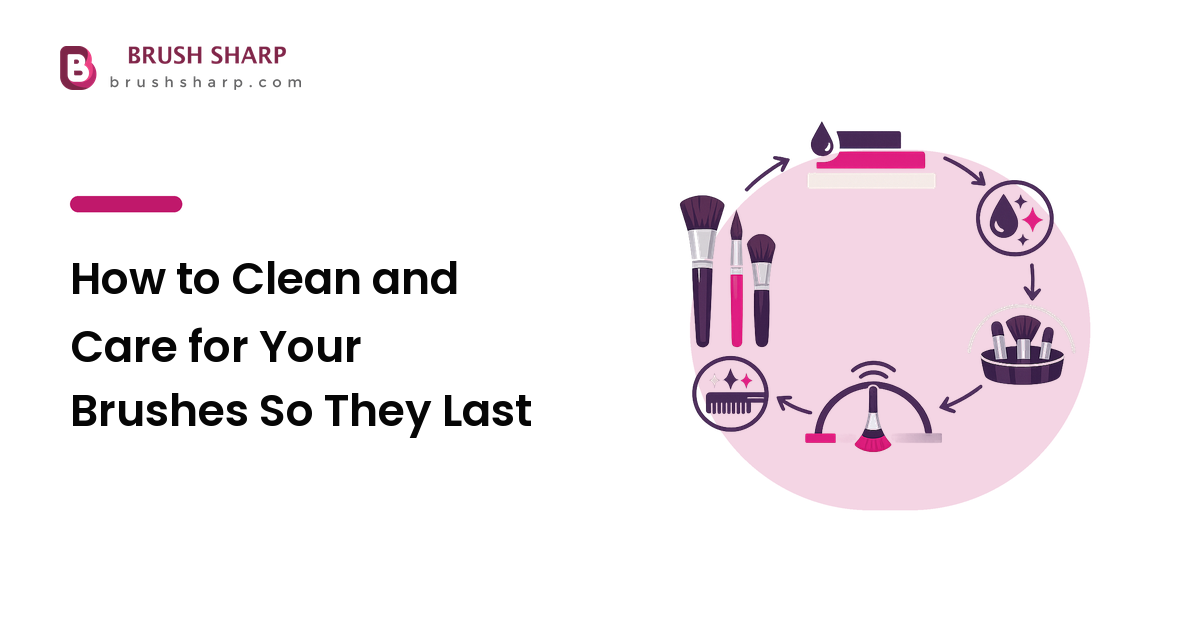
A simple brush-care routine
- Wipe off excess product before washing.
- Clean with the right cleaner, working root to tip.
- Rinse until the water runs clear, ferrule to tip.
- Reshape the tip while the bristles are damp.
- Dry flat or hanging, never tip-up or with heat.
- Store flat or handle-down so nothing crushes the tip.
FAQ
How often should I clean my brushes?
Paint and art brushes should be cleaned after every session so nothing dries in them. Makeup brushes used on your face benefit from a wash every one to two weeks for hygiene, and more often for brushes used with liquid or cream products.
Can I leave a brush soaking in water or solvent overnight?
No. Long soaking — especially resting on the tip — bends the bristles and lets liquid sit in the ferrule, loosening the glue. A short soak to soften dried product is fine, but suspend the brush so the tip does not touch the bottom.
How do I save a brush with dried paint in it?
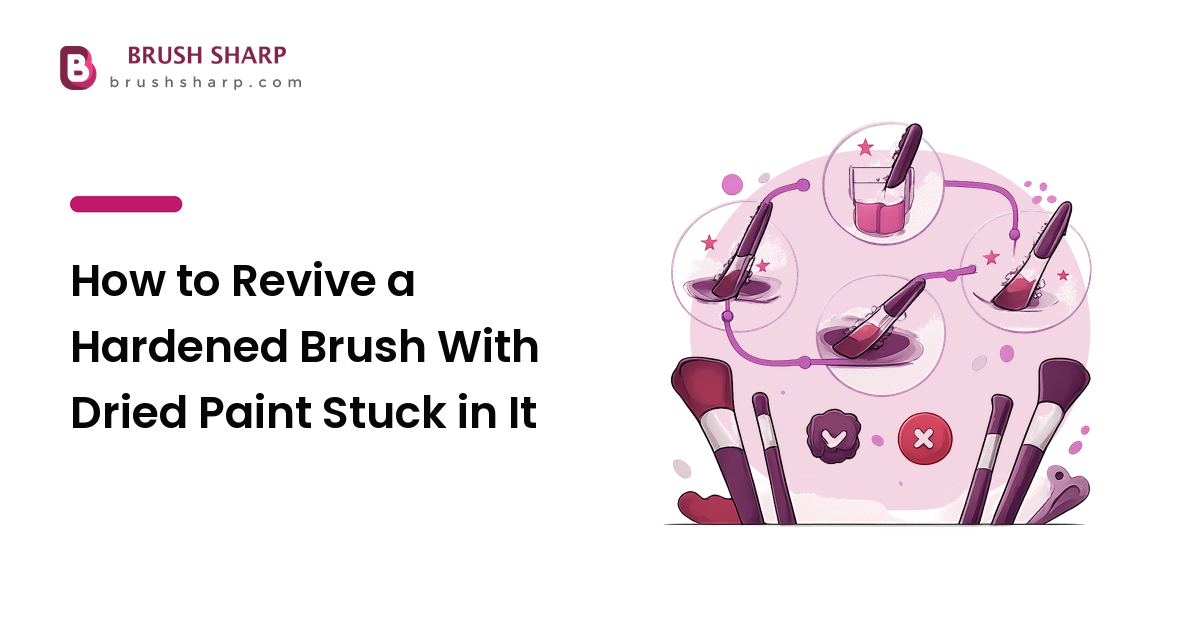
For water-based paint, soak the bristles in warm soapy water, then work the softened paint out gently with your fingers or a cleaning pad. Stubborn or oil-based buildup may need a dedicated brush restorer. Reshape and dry properly afterward — but a brush splayed at the ferrule may not fully recover.
Should I condition the bristles?
Natural-hair brushes can benefit from an occasional light conditioning to stay supple, rinsed out well. Synthetic bristles generally do not need it. Either way, conditioning is optional next to cleaning, reshaping, and proper drying, which matter far more.
When is a brush no longer worth saving?
If the bristles are permanently splayed at the ferrule, shedding heavily, or the ferrule is loose on the handle, the brush has reached the end. At that point a replacement will perform better than any amount of cleaning.
Next step
Pick one brush you use often and give it the full routine today — wipe, clean root to tip, rinse clear, reshape, and lay it flat to dry. Make that the default after every use, and your brushes will stay sharp and keep their shape for years.