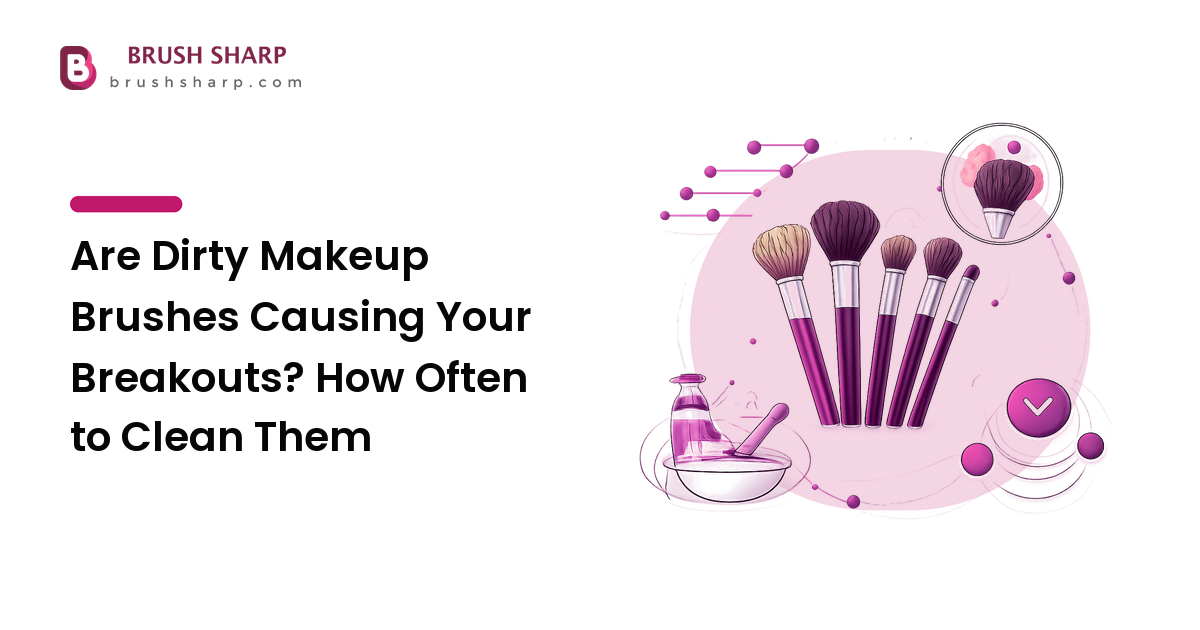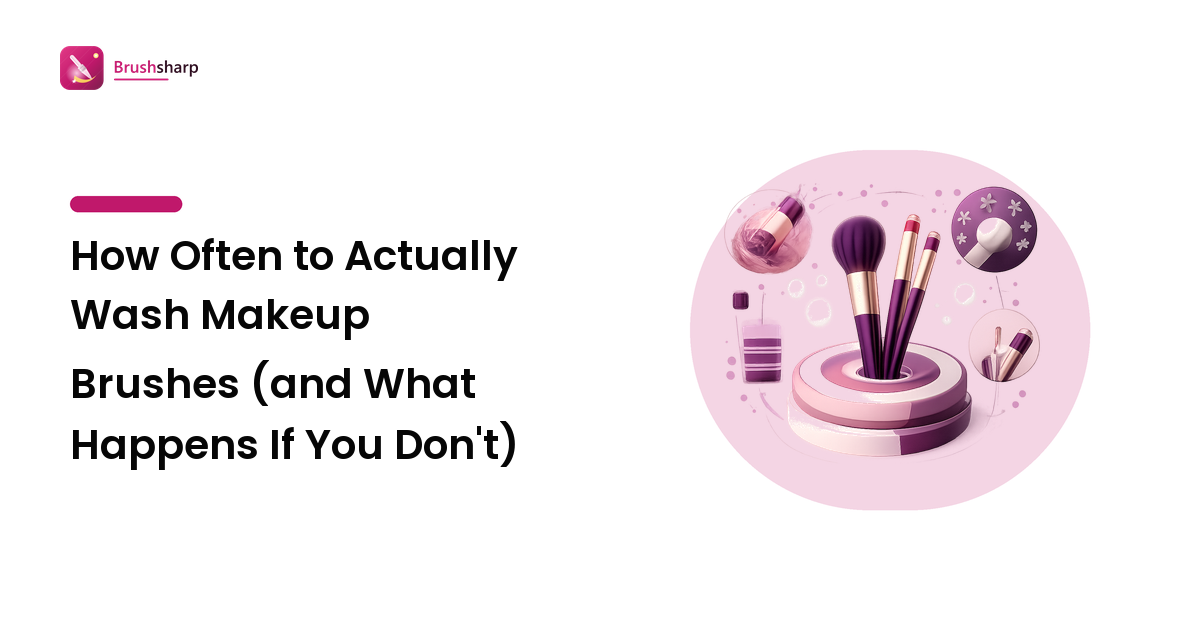
Nobody washes their makeup brushes as often as the internet says they should. That is partly because the advice is usually a single number thrown at every brush in the kit — and a foundation brush and a fan brush live completely different lives.
The short version: wash the brushes that touch liquid or cream products about once a week, powder brushes roughly every two weeks, and anything that touched a spot or was used while you were unwell before it goes near clean skin again. The reason those numbers differ has nothing to do with willpower and everything to do with what is packed into the bristles — and once you understand the mechanism, the schedule stops feeling arbitrary and starts feeling obvious.
What actually builds up in a brush
A brush that looks fine can be badly overdue, because the buildup that matters is not the tinted colour on the tips. It is what has migrated down to the base of the bristles, right where they enter the ferrule — the metal band clamping them to the handle.
Three things collect there, and they arrive at different speeds.
Product residue. Liquid and cream formulas are built from oils, waxes, emollients and film-forming ingredients suspended around pigment. They stay soft and mobile, so every stroke wicks a little further down the bristles toward the ferrule. Once it settles there it slowly stiffens as the volatile parts evaporate, forming a firm cuff around the base of the bristle bundle. Powder is drier and travels more slowly, which is exactly why powder brushes can go longer between washes.
Skin oils and dead skin. Every pass over your face loads the brush with sebum and shed cells. This is the ingredient people forget, and it is why even a brush used only with clean pressed powder still gets greasy at the base. Sebum is also what turns dry powder buildup into a sticky paste.
Moisture. Anything damp — a wet-product brush, a brush spritzed with setting spray, a brush washed and put away before it fully dried — gives bacteria a friendlier environment than a dry one. Warm, dark bathroom cabinets do not help.
Put those together and the pattern is clear: the wetter the product and the more skin contact the brush gets, the faster it fouls. That single rule generates the whole schedule below.
A realistic washing schedule by brush type
Treat these as sensible defaults, not laws. Adjust up if you wear makeup daily, live somewhere hot, or have acne-prone skin; adjust down if a brush only comes out occasionally.
Foundation, concealer and cream brushes — about weekly
These are the hardest-working, dirtiest brushes you own. They carry the most product by volume, that product stays soft rather than drying out, and they cover the largest area of your face with the most pressure. Left longer, the base of the bristles stiffens noticeably and the brush stops flexing evenly — which is when foundation starts looking streaky no matter how carefully you buff.
Powder, blush, bronzer and setting brushes — roughly fortnightly
Powder migrates more slowly, so these can stretch further. The tell is usually feel rather than colour: a powder brush that has gone too long feels slightly tacky at the base and its tips lose their soft, springy fan. Densely packed kabuki-style brushes need washing sooner than loose, fluffy dusters, because tight packing traps residue where you cannot see it.
Eye brushes — every couple of weeks, sooner around illness
The eye area is small and unforgiving, and blending brushes accumulate a surprising amount of oil from the lid. Anything used with cream shadow, gel liner or a wet-application technique belongs on the weekly schedule instead. After conjunctivitis, a stye, a cold or flu, wash eye brushes before reuse — or replace inexpensive ones outright.
Lip brushes — after each use, or close to it
Lip products are heavily waxed and pigmented, and lip brushes are small enough that a quick wash takes seconds. Waxy residue that hardens in a fine lip brush ruins its edge permanently.
Anything that touched a breakout — before it touches clean skin
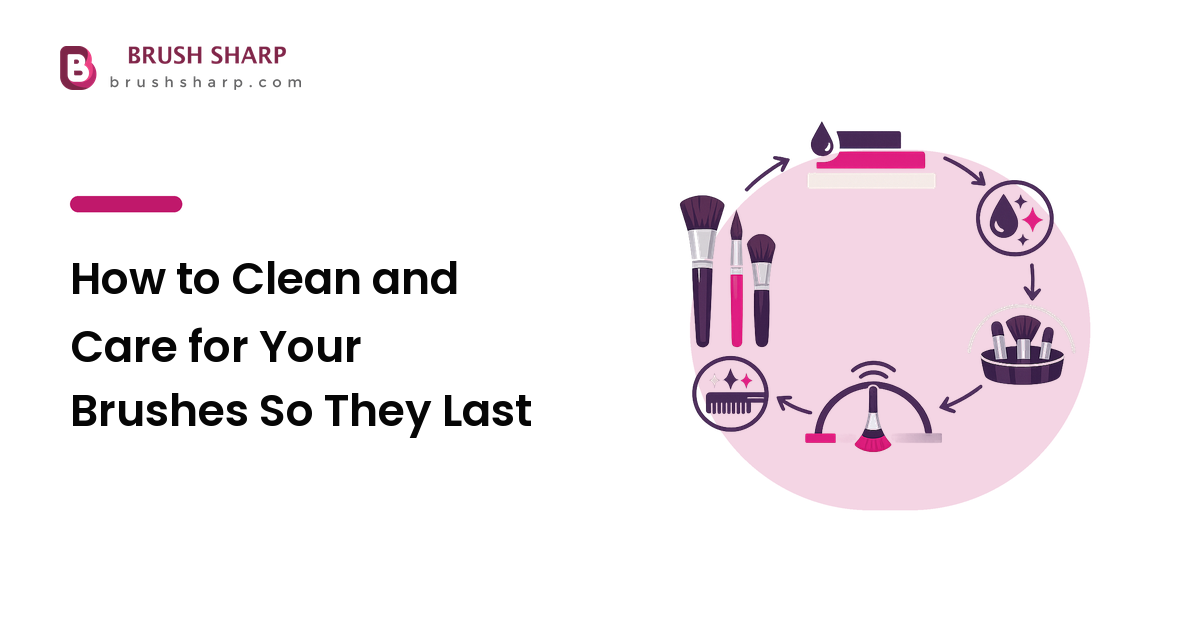
A brush passed over an active spot can carry bacteria across the rest of your face. Wash it, or use a clean brush for the rest of the application. If you are trying to work out whether your tools are behind repeated flare-ups in the same places, our guide to cleaning and caring for brushes covers the full routine that keeps them out of the equation.
What actually happens if you don't
The hygiene argument gets all the attention, but neglect costs you in three separate ways, and two of them are about the brush itself.
Your application quality drops first. This is the consequence people notice without connecting it to cleaning. A brush works because its bristle tips can move independently and spring back — that is what "blending" physically is. As residue cements the base of the bundle, the effective flex point moves up toward the tip, the brush gets stiffer and less forgiving, and it deposits product in stripes instead of diffusing it. A saturated brush also stops picking up pigment properly, so you press harder, which splays the tip further. Colour contamination is the other half: a bronzer brush still loaded with yesterday's product will not give you a clean blush.
The brush itself wears out faster. Hardened residue at the ferrule holds bristles at unnatural angles, and bristles held bent long enough stay bent. That is what a permanently splayed brush is — not wear from use, but shape set by dried product. Meanwhile the pressing-harder cycle above accelerates shedding at the ferrule. A well-kept mid-range brush comfortably outlives a neglected expensive one.
Your products and your skin take the hit. A greasy brush dipped repeatedly into a pressed powder deposits oil on the pan, forming that shiny, hardened glaze that stops the powder picking up at all. On the skin side, brushes hold old product, oil, dead skin and bacteria, and pressing that back into your face can clog pores and irritate skin, particularly if you are acne-prone. Brushes are one plausible factor among several, though, alongside products, hormones and your wider routine. This is general hygiene guidance rather than medical advice — for painful, persistent or worsening skin, see a dermatologist.
The signs a brush is overdue
Rather than tracking dates for every brush, learn to read them. A brush is overdue when:
- The base feels stiff or tacky when you pinch just above the ferrule. Compare it to a freshly washed brush of the same type — the difference is unmistakable.
- It lays down colour in a line instead of diffusing it, even on skin you have just prepped.
- The tip has lost its shape — a dome gone flat-topped, a tapered blender that now reads as blunt.
- Colour transfers to a clean tissue, meaning the brush is still carrying old product.
- It smells. Rancid sebum has a distinct, slightly sour note. That brush needed washing a while ago.
Washing more often without wrecking the brush
Frequent washing is not what damages brushes — rough washing is. If cleaning has cost you brushes in the past, the technique is the culprit, and fixing it removes the reason to skip washes.
Keep bristles pointing down under lukewarm water so nothing runs up into the ferrule, where water softens the glue and causes shedding. Use a mild cleanser — gentle shampoo, dedicated brush soap, or a little mild facial cleanser for greasy cream-product brushes; no "miracle" product required. Work the lather from the base outward toward the tip rather than grinding the brush flat in circles. Rinse until the water runs completely clear, squeeze out the excess with a towel, pinch the tip back into shape while damp, and dry flat at the edge of a counter or hanging bristles-down. Never stand a wet brush upright, and skip the hair dryer — heat softens glue and frizzes natural hair.
Natural-hair brushes (goat, pony, squirrel) have a scaled cuticle surface that grips powder pigment and absorbs oils, so they need washing on schedule but dislike long soaks and harsh detergent. Synthetic bristles are smooth and non-porous, release cream and liquid product far more readily, and tolerate frequent washing — one practical reason they suit wet formulas.
Spot-cleaning fills the gaps, it does not replace a wash. Swirling a brush on a clean towel with a quick-drying cleaner lifts surface pigment so you can switch shades mid-session, and it dries fast enough to reuse the brush the same day — but it never reaches the buildup at the base, which is the part that matters. If you use alcohol-based sprays, work in a ventilated space, keep them away from your eyes, apply to the bristles rather than soaking the ferrule, and let the brush dry fully before it touches your face.
A schedule you will actually keep
Cleaning schedules fail because they treat twenty brushes as one job. Split the kit instead:
- Sort once into two groups — wet-product and powder. That sorting is the whole system.
- Wash the wet-product group weekly, on a fixed day; four or five brushes takes a few minutes.
- Wash the powder group on alternate weeks, same day.
- Wash on demand for anything that touched a breakout, a shared face, or an illness.
- Dry overnight, then store so nothing presses on the tips.
Pairing the wash with something you already do weekly — the evening you change your pillowcase, say — does more for consistency than any reminder app.
FAQ
How often should you wash makeup brushes?
It depends on what the brush holds. Foundation, concealer and other liquid or cream brushes want washing about once a week; powder, blush, bronzer and eye brushes roughly every two weeks. Wash any brush sooner if it touched a breakout, if you have been unwell, or if it feels stiff at the base.
What happens if you never wash your makeup brushes?
Three things. The brush stiffens as residue hardens near the ferrule, so it stripes product instead of blending it; the bristles set into a splayed shape and shed, shortening the brush's life; and the accumulated oil, dead skin and bacteria get pressed back into your face, which can clog pores and irritate skin.
Can you wash makeup brushes too often?
Washing frequently is fine — washing roughly is not. Hot water, hard scrubbing and letting water sit in the ferrule loosen the glue and splay the tips. Lukewarm water, mild soap, base-to-tip motion and tip-down drying let you wash as often as you like without shortening the brush's life.
How often should you wash brushes you only use occasionally?
Every couple of months is a reasonable floor even for rarely used brushes. Dust settles on stored bristles, and skin oil already in the brush does not disappear with time. Brushes stored bristles-up in an open jar in a bathroom need it sooner than ones kept covered.
Is spot-cleaning enough between washes?
No — treat it as a supplement. A quick-drying spot cleaner lifts surface pigment so you can switch shades mid-session, but it does not reach the residue packed at the base of the bristles, which is what stiffens the brush and holds bacteria. Keep the full wash schedule and use spot-cleaning in between.
Next step
Do the sorting tonight: split your brushes into wet-product and powder piles, wash the wet-product pile, and put the powder pile on next week. That one act of sorting is what turns "I should clean my brushes" into a schedule that actually runs. For more vendor-neutral guides on choosing and caring for brushes that hold their shape, visit brushsharp.com.