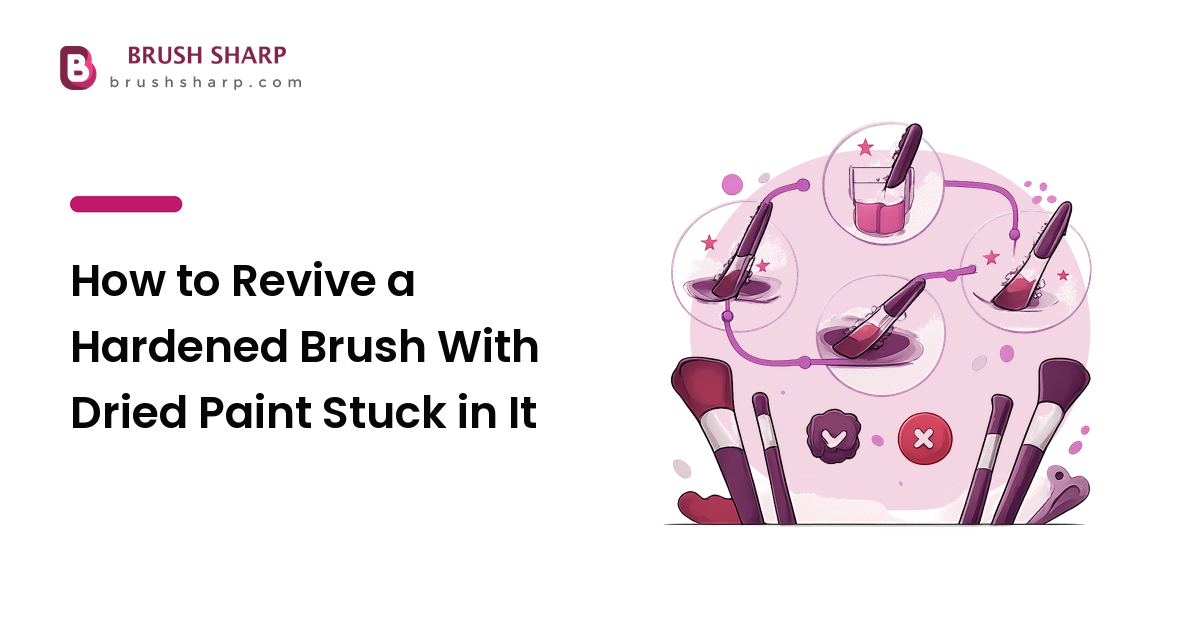
You reach for a brush you swore you cleaned, and the bristles are a stiff, fanned-out paddle. The instinct is to throw it out. Don't — not yet. Most "ruined" brushes are not ruined; they are clogged. The bristles themselves are usually fine, and the real problem is hardened paint acting like cement near the base. Dissolve that cement without damaging the bristles or the glue, and a surprising number of brushes come back to near-new shape.
The key takeaway up front: match the solvent to the paint, soften with time instead of force, and comb the paint out from the ferrule toward the tip — never scrub it. Force is what actually destroys a hardened brush; patience is what saves it.
First, identify what dried in the brush
You cannot dissolve paint you have misidentified. The single most common rescue failure is using water on a brush stiffened with oil paint, or harsh solvent on one stiffened with water-based paint — both just smear or set the residue harder.
- Water-based (acrylic, latex, watercolor, most house paint): dried, it forms a flexible-to-brittle plastic film. Softens with warm water, soap, and — for stubborn cured acrylic — isopropyl alcohol or a dedicated brush restorer.
- Oil-based (oil paint, alkyd, oil-based varnish): dried, it is a hard, glossy resin. Needs the right solvent (a mineral-spirit-type product, or the thinner the paint specified).
- Shellac or contact adhesive: shellac releases with denatured alcohol; some adhesives need a dedicated remover.
If you genuinely don't know, assume water-based first — it is the gentler test — and escalate only if a warm soapy soak does nothing after an hour.
A safety note before any solvent: work in a ventilated space, wear gloves, keep solvents off your skin and away from heat, and never pour them down the drain. Let used solvent settle in a sealed jar, reuse the clear liquid, and dispose of the sludge as hazardous waste per local rules.
The soak-and-comb method
This is the core technique, and it works because it removes paint in the order it dried: the tip first, the packed base last.
Step 1: Suspend, don't dunk
Drill or clip the brush so the bristles hang into the solvent without the tip resting on the bottom of the jar. A brush left standing on its tip overnight develops a permanent hook — you would trade a clogged brush for a bent one. A clothes peg across the rim, or a wire through a hole punched in a yogurt-tub lid, both work.
Step 2: Soak on the clock, not by force
Give the solvent time to do the work your fingers shouldn't. Warm soapy water for water-based paint; the matched solvent for oil. Start with 30 minutes, check, and extend. Cured acrylic can need several hours; an overnight soak in alcohol or restorer is fine as long as the tip is suspended. Resist the urge to bend or pry the bristles while they are still rigid — rigid bristles snapped at the ferrule don't grow back.
Step 3: Work from the ferrule outward with a comb
Once the base feels even slightly pliable, lay the brush flat and draw a brush comb (or an old fine-tooth comb, or a wire brush for coarse bristles) from the metal ferrule toward the tip, again and again. This is the non-obvious heart of the method: you are pulling softened paint out the open end, the same way it would have rinsed out if you'd cleaned it fresh. Scrubbing the tip in circles, by contrast, drives loosened paint back down into the base and splays the bristles wider.
Step 4: Wash, reshape, dry properly
When the comb runs clean, wash the brush with mild soap and warm water (even after a solvent soak — soap removes the last residue), rinse from ferrule to tip until the water runs clear, then pinch the damp bristles back into their original profile: a point for a round, a chisel edge for a flat. Dry it flat or hanging tip-down, never tip-up in a jar, so no water sits in the ferrule. This is the same discipline behind our brush-care routine — and it is exactly what prevents the brush from re-hardening next time.
A worked example
Take a 2-inch synthetic sash brush stiff with about three weeks of dried latex wall paint — fanned out, rock-hard at the base, the kind most people bin.
- Hung in a jar of warm water with a squeeze of dish soap, tip suspended, for 45 minutes. The outer bristles softened; the core was still stiff.
- Swapped to fresh warm water with a capful of isopropyl alcohol, soaked another 90 minutes. The base finally gave.
- Combed from the ferrule outward, maybe 40 strokes, re-wetting twice. Grey paint kept lifting out each pass.
- Washed with soap, rinsed until clear, pinched back to a chisel edge, laid flat to dry overnight.
Result: roughly 90 percent recovery — usable for cutting-in again, a slightly softer edge than new. Total hands-on time under ten minutes; the rest was the soak working on its own. Compare that to scrubbing it stiff against a jar bottom for two minutes, which would have splayed it permanently and saved nothing.
Common mistakes and why they backfire
- Scrubbing or bending rigid bristles. Hardened bristles are brittle at the ferrule. Force snaps them or splays them for good. The fix is always more soak time, not more pressure.
- Hot or boiling water. Heat can melt the glue inside the ferrule and loosen the whole bristle bundle. Warm is the limit.
- Wrong solvent for the paint. Water on oil paint smears it; aggressive solvent on a synthetic brush can also soften the bristles themselves. Match the paint, and test on a small section first.
- Standing the brush on its tip to soak. The most self-defeating error — you dissolve the clog but bend the brush into a hook. Always suspend.
- Combing tip-to-ferrule. This packs softened paint back into the base. Always comb the other way, ferrule to tip.
Edge cases and when to stop
Some brushes are genuinely past saving, and recognizing this saves you an afternoon:
- Splayed and re-hardened in the splayed shape. If the bristles set fanned out and stay fanned after soaking and reshaping, the memory may be permanent.
- A loose or rotating ferrule. That means the glue has already failed (often from past hot water or trapped moisture). No amount of cleaning re-bonds it.
- Heavy shedding once softened. A few stray hairs are fine; clumps mean the bundle is letting go.
- Cheap throwaway bristles. On a bargain-bin synthetic, the rescue effort can cost more in solvent than a replacement — a fair trade-off to weigh, not a failure.
For natural-hair and better synthetic brushes, the soak almost always beats replacement. For the cheapest brushes, do the math.
The trick to remember
If you take one thing from this: a hardened brush is a timing problem, not a strength problem. The bristles want to come clean; the dried paint just needs long enough in the right solvent, and the paint wants to leave through the open tip. Give it the soak, comb ferrule-to-tip, and let patience — not your knuckles — do the work.
FAQ
Can vinegar really soften a hardened paintbrush?
Warm vinegar can help soften dried water-based paint, especially if you warm the brush in it gently and then comb. It does little for cured oil paint. Treat it as a mild, low-odor first attempt before reaching for alcohol or a dedicated restorer — not a miracle fix.
How long should I soak a stiff brush?
Start at 30 minutes and extend by feel. Water-based paint often releases within an hour; heavily cured acrylic or oil may need several hours or an overnight soak. Always suspend the tip off the jar bottom while it soaks, however long it takes.
Will a brush restorer damage the bristles?
A dedicated restorer used as directed is generally safe, but stronger solvents can soften some synthetic bristles if left too long. Follow the product's time limits, test on one brush first, and wash with soap and water afterward to remove residue.
My brush came clean but won't hold a point anymore. Why?
The paint dried while the bristles were splayed, and they set in that shape. Reshape while damp and let it fully dry held in profile; if it still fans out after a couple of cycles, the bristle memory is likely permanent and the brush is better retired for rough work.
Is it worth reviving a cheap brush?
Sometimes not. If the solvent, time, and a replacement brush cost about the same, replace it. Save the rescue effort for natural-hair and quality synthetic brushes, where a revived brush genuinely outperforms a new budget one.
Next step
Don't write off your stiff brushes on looks alone. Pick the worst one in your jar, suspend it in the right solvent tonight, and comb it out ferrule-to-tip tomorrow — most come back further than you'd expect. Then keep them that way: clean fresh, reshape damp, and dry tip-down every time. For more brush rescues, routines, and honest gear guidance, visit brushsharp.com.