Walk down any brush aisle and the pricing tells a story that isn't quite true: natural hair sits at the premium end, synthetic at the budget end, and the implication is that you get what you pay for. You don't, not reliably. Modern synthetic filaments outperform animal hair for whole categories of work, while a few jobs still need natural bristle. The material is a fit question, not a quality ladder.
The takeaway up front: match the bristle to what it has to hold and the finish you want, not to its price. Use natural hair where its texture genuinely helps — holding lots of thin, oil-based or watery medium, or moving loose powder with a soft touch. Use synthetic for water-based paints, for anything you want easy to clean, and for makeup where hygiene and cruelty-free matter. Get that fit right and a mid-priced brush in the correct material beats an expensive one in the wrong one.
What "natural" and "synthetic" actually mean
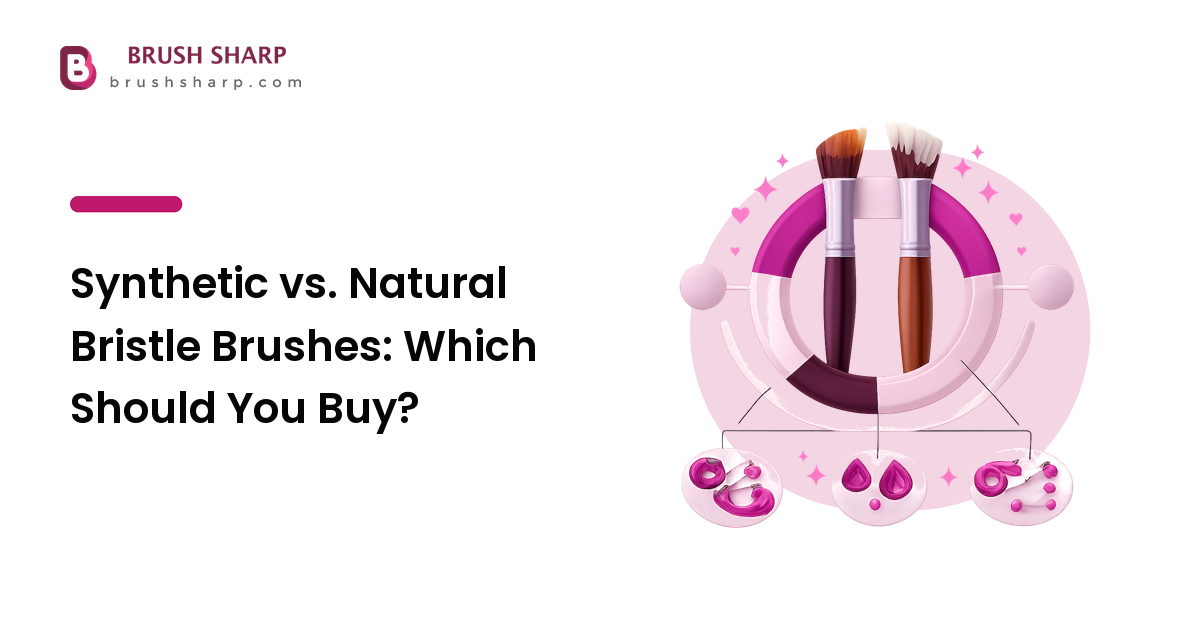
Natural bristles are animal hair — hog (boar) for stiff paint and oil brushes, and softer goat, pony, or squirrel for makeup and watercolor. Each hair has a scaly surface and a tapered, often split tip (a "flag"), and those microscopic features grab and hold liquid. That's why natural hair carries a lot of medium and releases it slowly.
Synthetic bristles are man-made filaments — usually nylon, polyester, or a blend (Taklon is a common branded version) — extruded to a smooth, uniform shape, though good ones are tapered and "flagged" to imitate split tips. Their defining trait is consistency: every filament behaves the same, they don't absorb water into the fibre, and they spring back to shape.
Neither label tells you about ferrule quality, glue, or assembly — and those decide longevity as much as the hair does. Treat "natural vs. synthetic" as the starting question, not the whole answer.
How each performs by job
Compare task by task — the same property that helps in one medium hurts in another.
Paint brushes (walls, trim, furniture)
The deciding factor is the paint base, close to a hard rule:
- Water-based paint (latex, acrylic) → synthetic. Natural bristles soak up water, swell, go limp, and lose their edge within an hour — which is why a hog-bristle brush turns to mush in wall paint. Synthetic filaments don't absorb water, so they stay stiff and keep a crisp cutting-in line all day. The reason is durability and finish control, not cost.
- Oil-based paint, varnish, stain → natural or stiff synthetic. Natural hog bristle holds oil-based product and lays it down smoothly, with no water to make it swell, so many painters reach for it here. Modern stiff synthetics also handle oils well, making this a genuine choice rather than a rule.
If you remember one thing about paint brushes: water-based paint and natural hair don't mix.
Art brushes (watercolor, acrylic, oil)
Here natural hair earns its premium — sometimes.
- Watercolor → natural shines, synthetic is catching up. Sable and squirrel hold a huge reservoir of water and color, release it slowly, and snap to a fine point — the classic case for an expensive natural round. But premium synthetics now mimic this for far less and survive abuse better, making a good synthetic the smarter first brush.
- Acrylic → synthetic, clearly. Acrylic is water-based and mildly abrasive as it dries, which is hard on natural hair. Synthetic stands up to it and cleans more easily.
- Oil → either. Hog bristle for texture, soft synthetic or sable for smooth blending — a finish preference, not a quality gap.
Makeup brushes (face and eyes)
This is where the old "natural is better" assumption has flipped hardest:
- Powder (loose powder, blush, bronzer) → traditionally natural, now excellent synthetic. The cuticle texture of goat or squirrel grabs powder and diffuses it softly, which is why luxury powder brushes were long animal hair — but top-tier synthetics now do this convincingly too.
- Cream and liquid (foundation, concealer, cream blush) → synthetic, always. Non-absorbent filaments don't soak up product, so more lands on your face and the brush washes clean far more easily. Natural hair drinks liquid foundation and is hard to sanitize.
- Hygiene and ethics → synthetic. Non-porous filaments hold less residue and rinse cleaner, which matters for skin, and they're the cruelty-free choice. For most people building a kit today, full-synthetic is the sensible default.
Cost, cleaning, and longevity — the part the price tag hides
Sticker price is only the first cost; the bristle also sets how the brush lives.
- Up-front price: Natural hair generally costs more, especially fine art hair like sable. A great synthetic can cost less than a mediocre natural brush.
- Cleaning and durability: Synthetic is more forgiving — it doesn't absorb water, tolerates more cleaners, rinses faster, and resists swelling and rough use, so it often outlasts natural hair in demanding water-based work. Natural hair lasts for years when looked after, but it needs gentler treatment and tolerates mistakes less. Because cleaning differs by material, build the habit around your bristle type — see the full method in the brush care guide.
- A safety note: Whatever the bristle, solvent and alcohol cleaning needs ventilation, skin protection, and proper disposal — never pour solvents down the drain. Some plastics dislike strong solvents too, so check before soaking a synthetic.
A simple rule for choosing
Before you buy, run three quick checks:
- What's the medium's base? Water-based (latex, acrylic, liquid foundation) → synthetic. Oil- or solvent-based → natural or stiff synthetic both work.
- What does it need to hold? A big, slow-releasing reservoir of thin watercolor or loose powder is where natural texture still has an edge; precise, springy strokes favor synthetic.
- Do hygiene, ethics, or easy cleaning matter? For makeup, anything you'll wash constantly, or if you want cruelty-free — choose synthetic.
If two checks point the same way, that's your answer. On a genuine tie — oil paint, premium watercolor — buy on feel and budget, because both perform and the "right" one is the one you'll enjoy using.
FAQ
Are synthetic brushes as good as natural?
For most jobs, yes — and for water-based paint, acrylics, cream makeup, and easy cleaning, they're better. Premium synthetics now rival natural hair even in watercolor and powder, where animal hair held its advantage longest. Natural still leads in a few tasks, but "natural = better" is no longer a safe assumption.
Why is natural hair more expensive?
Because it's a harvested animal product in limited supply, graded by quality, and fine art hairs like sable are scarce. Price reflects scarcity and grading, not a guarantee of better performance for your specific job. A well-made synthetic can outperform a costlier natural brush in the wrong application, so don't read the higher price as proof of fitness.
Can I use a natural bristle brush with acrylic or latex paint?
It's a poor match. Both are water-based, so natural bristles absorb water, swell, go limp, and lose their edge — and acrylic is abrasive as it dries, which wears the hair. Use synthetic for any water-based paint, and save natural hog bristle for oil-based paints, stains, and varnishes where there's no water to ruin it.
Are synthetic makeup brushes more hygienic?
Generally, yes. Synthetic filaments are non-porous, so they absorb less product, hold less residue and bacteria, and rinse cleaner than animal hair — which is helpful for skin and makes regular washing easier. They're also the cruelty-free option. This is general information, not medical advice; if you have persistent skin concerns, see a dermatologist rather than assuming it's only your brushes.
How can I tell good synthetic from cheap synthetic?
Look for tapered, "flagged" (split-tip) filaments rather than blunt uniform ones, bristles that spring back instead of staying bent, a snug crimped ferrule with no loose hairs, and a tip that comes to a clean point or edge when wet. Cheap synthetic feels plasticky, sheds, and won't hold a precise edge — those brushes are what gave synthetic its old bad name.
Next step
The fancier-sounding brush isn't automatically the better buy, and the cheap synthetic isn't automatically a compromise — the right one matches your medium, your stroke, and how you'll clean it. Before your next purchase, run the three checks: base, what it has to hold, and whether hygiene or cleaning matter. Match those and you'll spend less, fight your brush less, and get a cleaner finish. For more vendor-neutral brush guides, visit brushsharp.com.