For acrylic painting, synthetic filament brushes are the right default: acrylic is water-based, and synthetic hair does not swell or wear out from frequent washing. Match stiffness to your paint — stiffer filament for heavy-body acrylic, softer filament for fluid acrylic and thin glazes — and clean every brush before the paint dries.
Acrylic is unusually hard on brushes for two reasons that have nothing to do with quality. First, it is water-based, so anything that absorbs water changes shape while you paint. Second, it dries into a plastic film — and once that film sets in the base of the bristles, no amount of soap will get it out.
Why synthetic bristles suit acrylic
Natural animal hair is porous. Each strand has a scaly surface that soaks up water, and a bundle of soaked hair swells, softens, and loses its snap mid-session — exactly when you want a crisp edge. Acrylic is also mildly alkaline, and repeated exposure plus repeated washing degrades soft natural hair faster than it degrades a man-made filament.
Synthetic filament — nylon, polyester, or a blend such as the Taklon-type filaments common in art brushes — does not absorb water into the fibre. It keeps its shape wet or dry, springs back after every stroke, and releases paint readily when you rinse it, because the paint sits on a smooth surface rather than lodging in a scaly one.
The usual exception is stiff hog bristle, the natural hair traditionally used for oil painting. It genuinely works for thick, textured acrylic and for scrubbing paint into canvas weave — it is stiff enough to leave visible brush marks, which some painters want. But it holds water badly and frays with heavy washing, so treat it as a texture tool rather than your main set. For the full trade-off across mediums, see our comparison of synthetic vs. natural bristle brushes.
How stiff should an acrylic brush be?
Stiffness — what brush makers call spring or snap — should match the consistency of the paint you actually use, and acrylic spans a wider consistency range than most mediums.
Heavy-body acrylic has the texture of soft butter. Moving it takes a stiff, springy brush with enough backbone to push paint across a surface and hold an impasto ridge. Stiffer synthetic filament, or hog bristle, is right here; a soft brush just flops and smears.
Soft-body and fluid acrylic flow more like cream or ink. They want a softer filament that lays colour smoothly, leaves fewer brush marks, and holds enough liquid for a glaze or a wash.
Acrylic thinned with water or medium behaves almost like watercolour, and a soft round with a good point handles it best — though thin acrylic still dries fast, so it needs the same prompt rinse as any other.
If you buy one stiffness, buy medium-firm synthetic. It pushes moderately thick paint without collapsing and still lays a reasonably smooth thin coat.
Which brush shapes matter most for acrylics?
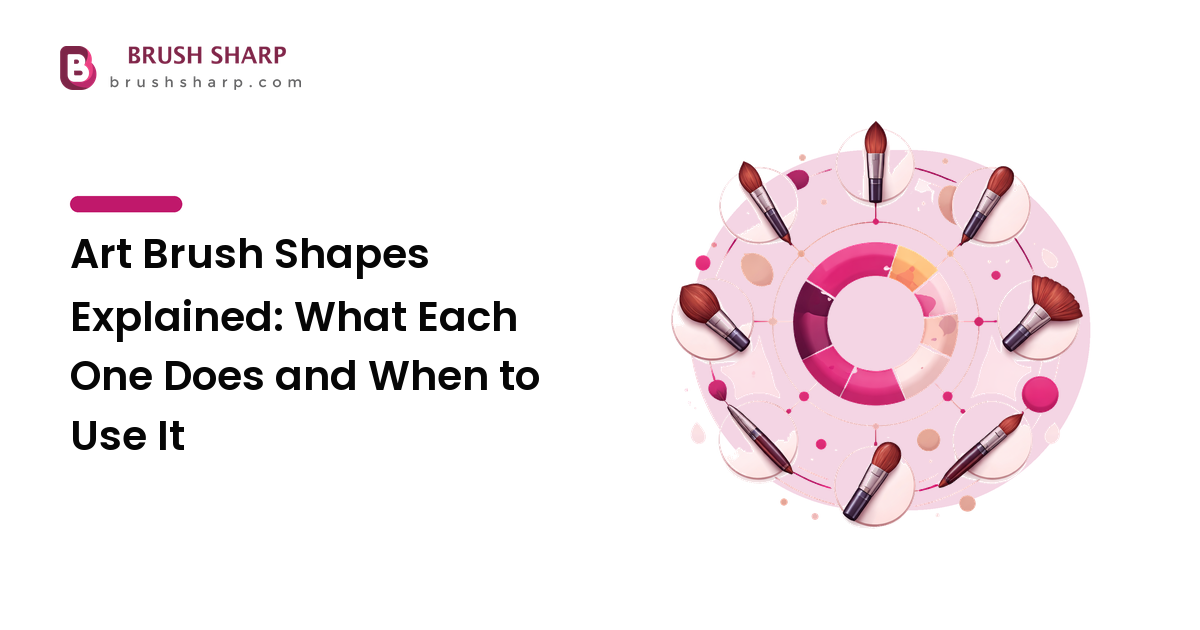
Shape decides the mark. The silhouette of a loaded tip is the silhouette of the stroke, so a small set of shapes covers most acrylic work. Our full breakdown of art brush shapes goes deeper; here is what each does specifically with acrylic.
| Shape | What it does in acrylic | Best paired with |
|---|---|---|
| Round | Lines, detail, and versatile fills; press for width, lift for a point | Fluid and thinned acrylic; softer filament |
| Flat | Blocks in large areas fast; chisel edge cuts crisp straight lines | Any consistency; medium-firm filament |
| Bright (short flat) | Short, deliberate strokes; drives thick paint into canvas weave | Heavy-body acrylic; stiff filament |
| Filbert | Broad strokes with soft, feathered edges; blending organic forms | Soft-body acrylic; medium filament |
| Angular | Curved strokes, corners, and clean cut-in edges | All consistencies; medium-firm filament |
| Fan | Texture, foliage, hair, and softening transitions | Thinned acrylic only — it holds very little |
| Liner / rigger | Long unbroken thin lines that do not break halfway | Thinned acrylic; soft filament |
A workable starter set is four synthetic brushes: a medium round (about #6–#8), a small round (about #2), a half-inch flat, and a #6 filbert. Add an angular and a liner when a painting asks for them. Brush size numbers are not standardised between makers, so judge the bristle length and tip by eye rather than trusting the number.
For small-scale figure or model painting the demands differ — point retention and paint-load control matter more than coverage. Our guide to choosing miniature painting brushes covers that case.
How do you clean acrylic brushes properly?
This is where acrylic brushes are won or lost. Acrylic is water-based, so water and mild soap are the correct cleaner while the paint is wet — you do not need mineral spirits, turpentine, or any solvent for acrylic. (Solvents belong to oil paint: mineral spirits or turpentine dissolve oil-based paint, and they need ventilation, gloves, and disposal at a hazardous-waste point rather than down a drain. Water is for acrylic and watercolour.)
The routine that works:
- Rinse immediately, and rinse often. Wipe excess paint on a rag, then rinse in clean water the moment you set the brush down. Acrylic can begin skinning over in minutes on a warm, dry day.
- Park brushes in a water pot resting on their side, not their tips. Standing a brush on its bristles bends them permanently and lets water sit against the ferrule glue.
- Wash with a drop of mild soap. Lather right up to the base of the bristles, where paint hides, and rinse until no colour comes out and the lather stays white. Trapped paint at the ferrule is what turns a brush into a stiff paddle over weeks.
- Reshape while damp. Draw the bristles back to their original silhouette and let them set that way.
- Dry flat or tip-down. Never dry a brush bristles-up: water runs into the ferrule, swells the glue, and loosens the bundle. Flat on a towel is fine.
Never leave a brush soaking for hours. It softens the glue, bends the bristles, and does nothing that a prompt rinse would not have done better. The same principles apply across every brush you own — the full routine lives in our brush care guide.
If you already have brushes that have gone hard, they are usually clogged rather than dead. A patient soak in the right softener, then combing the residue out from ferrule to tip, rescues a lot of them — our guide on reviving a hardened brush walks through it.
Do you need different brushes for acrylic and oil?
Not necessarily. Stiff hog bristle and firm synthetics work in both, and plenty of painters use the same shapes across mediums. What you should not do is move a brush between them without a proper clean, because leftover oil paint contaminates acrylic and leftover acrylic residue stiffens under solvent.
The bigger practical difference is time pressure. Oil stays workable for hours; acrylic sets in minutes. That is why acrylic painters keep water at hand and rinse constantly, and why a brush that survives years of oil painting can be ruined in one careless acrylic session.
FAQ
Are synthetic or natural brushes better for acrylic paint?
Synthetic, for most work. Acrylic is water-based, and natural hair absorbs water, swells, and loses its spring mid-session, while repeated washing wears it out faster. Synthetic filament keeps its shape wet or dry and releases acrylic readily when rinsed. Stiff hog bristle is the one useful natural exception, for heavy-body, heavily textured work.
What size brushes should I buy for acrylic painting?
Start with four: a medium round around #6–#8, a small round around #2, a half-inch flat, and a #6 filbert. That covers detail, lines, blocking in, edges, and soft-edged blending. Sizes are not standardised across makers, so compare the actual bristle length and tip rather than the printed number.
Can I use water to clean acrylic brushes, or do I need solvent?
Water and a little mild soap, while the paint is still wet — acrylic is water-based and needs no solvent. Mineral spirits and turpentine are for oil paint; if you do use them, work with ventilation and gloves and dispose of them at a hazardous-waste facility, never down the sink.
Why do my acrylic brushes go stiff even though I clean them?
Almost always paint trapped at the base of the bristles, right where they enter the ferrule. Rinsing the tip looks clean while a ring of acrylic quietly builds up underneath and hardens into plastic. Lather soap right up to the ferrule and rinse until the suds stay white.
Can I leave acrylic brushes soaking in water between sessions?
No. A short rest in a water pot during a session is fine as long as the brush leans on its side rather than standing on its tip, but long soaking swells the ferrule glue, bends the bristles, and can loosen the whole bundle. Rinse, reshape, and lay flat to dry instead.
Next step
Acrylic rewards a small, well-chosen set kept scrupulously clean far more than a big rack of brushes treated casually. Buy four synthetic brushes in the shapes above, match stiffness to how thick your paint is, and build the one habit that matters — rinse before the paint sets. For more vendor-neutral brush guides and comparisons, visit brushsharp.com.